Pages

Sunday, January 1, 2023

Update from Ukraine | Ruzzia lost 600 soldiers after the single Himars a...

Tne Economist Magazine Cover for 12=31=2022


DECEMBER 31ST 2022

Cover Story newsletter from The Economist
 

SUBSCRIBER ONLY

Cover Story

How we put together the Christmas double issue


The Economist

Every year, around May, a call goes out for pitches for The Economist’s Christmas issue. It feels odd, as the blossom drifts and the sun warms, to be thinking about the last issue of the year. But putting together 50-odd pages of colourful, witty, thought-provoking features takes a long time. 

First there are about 60 pitches to whittle down to around 18 pieces. There needs to be a balance in the final selection of stories: some history, but not too much; reporting from a range of places; some subjects touching on business, finance, economics or science; and, ideally, a bit of fun.

Amid a number of ideas about China, two stood out. The first was about the Wenzhounese, a group of emigrants who are making an outsize mark abroad. The second was a piece about reading Tang poetry, which the Chinese celebrate as the pinnacle of their civilisation, in translation. Both stories tell the reader about China in a way that reaches far beyond the news, deep into the country’s history and far into its hinterlands.

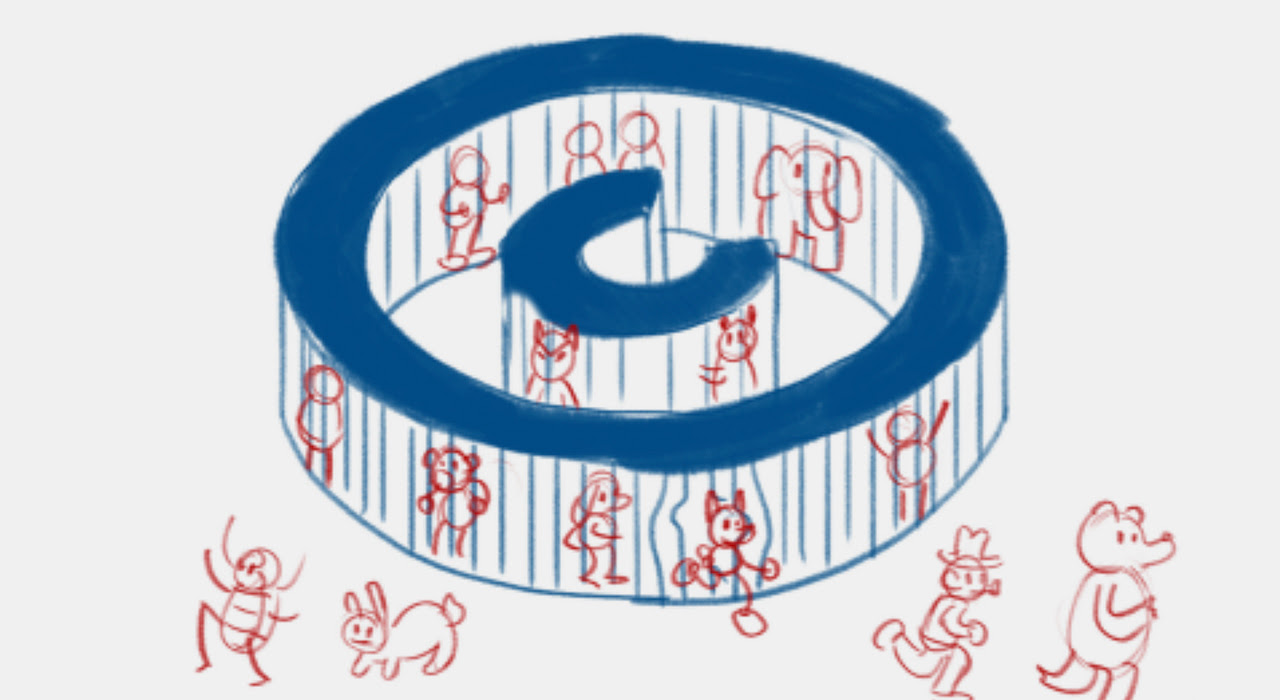
The pieces touching on business, finance, economics or science came in a variety of forms. A story about how Hollywood studios are preparing for the copyright to run out on some of its most beloved—and profitable—characters is as entertaining as the stories about to slip into the public domain. Care had to be taken with the illustrations. We wanted them to be reminiscent of those in question but had to avoid any legal pitfalls. The final illustrations are delightful, with our very own superheroes busting free.

As always, the pages are beautifully designed by our graphics department. Look carefully at the pages of the story about the death of grid cities in the print edition and you will notice that the text has been designed to echo the shape of city blocks. The illustration for a piece about the lessons we can learn from the great inflation of the 1500s has riotous abandon to it which is in keeping with the description of Europe at that time.

The photographs that go with a story about the Baduy, an ethnic group that the author describes as “the Amish of Indonesia” because they shun modernity, are particularly striking. The story is centred around Herman Jarkan, once part of the Inner Baduy. It was only possible because Mr Herman has left his village and ancestors’ way of living—the author would not have been allowed to visit him when he was still an Inner.

Five pages on the intricacies of the nitrogen cycle might seem like a daunting prospect, to both editor and reader. But our essay on “the wibbly-wobbly circle of life” is a joy—clear, precise and enlightening. It explains how human politics and economics are now thoroughly intertwined with a natural cycle that has been at work for billions of years. 

From the circle of life to the news cycle: a piece about the would-be philosophers of Silicon Valley was affected by what was happening in the world more than most. We needed to take into account the meltdown of Sam Bankman-Fried’s empire and his subsequent arrest without turning a long-planned feature into a news story. A brief mention added late in the day meant that the article felt suitably current without detracting from the original structure.

We put as much thought into the digital presentation of these stories as we do into how they appear on the printed page. A data-led feature on dogs explains the factors that affect the popularity of different breeds in a variety of countries over time. The data is fascinating in the print version but in the digital one we were able to make far more of it available and allow readers to play around with it.

This is my second year editing the Christmas issue and the joy of doing so does not diminish. Each individual feature is a delight and yet together, they are even more than the sum of their imaginative, thoughtful parts. Bringing them together is a treat. I hope you enjoy reading them as much as I have.

Josie Delap
Christmas editor

Highlights from the Christmas issue

→

A megadrought has revealed a possible mafia murder mystery (Christmas special)

→

Deadly, dirty, indispensable: the nitrogen industry has changed the world (Christmas special)

→

The Chinese celebrate Tang poetry as a pinnacle of their culture (Christmas special)

→The great inflation of the 1500s is echoing eerily today (Christmas special) 

Also from The Economist

Russian border line burning like hell: Ukrainian heroes made Putin taste...

Our House Almost Got Flooded On New Year's Eve

      You will often hear me say that our houses sits in "a global warming paradise." We are close enough to the sea to be in a fog belt. We do not have to worry about fires. Our house sits on solid rock. It is solidly bolted to the foundation. An earthquake would do less damage than in many other locations. Our house is 53 feet above sea level and 1/2 mile from the sea. We would ride a tsunami well (Never mind that Pacifica has not had a tsunami since the 1700s.) Our house sits on a hill 20 feet above the street. It would appear that we are immune from floods.

    We have one weak point. A generator sits right in the back of the back door of the kitchen. When heavy rain hits, water starts to accumulate. Over the years, water has risen in that area. The house has never been menaced.

        At Christmas of 2021, I found something quite interesting. It was called "Quick Dam." Its official name was Flood Bags and Barriers. I paid $30.00 for this device. When it arrived, I showed the device to Elena. She shrugged her shoulders as if to say that she doubted that we would ever need it.

    Yesterday we had an atmospheric river with over 10 inches of rain. For the first time in our 19 years in the house, flood waters menaced the back door of the house. It appeared that water would flood into the kitchen and dining room area.

    I deployed the barrier under the back door. I love things that are elegantly simple and are "think out of the box" original. When you stack the barrier and deploy it, water is absorbed. The barrier inflates. It becomes like sandbags place to stop flood waters. No water came into the kitchen or dining room. Elena worked hard and cooked us an incredible roast beef dinner with vegetables for our New Year's Eve dinner. The year ended well.