Pages

Monday, July 24, 2017

Had The Ottoman Empire Been Saved Rather Than Sunk

If the Ottoman Empire had not collapsedHad the Ottoman Empire been saved rather than sunk

Imagine the mayhem that might have been avoided
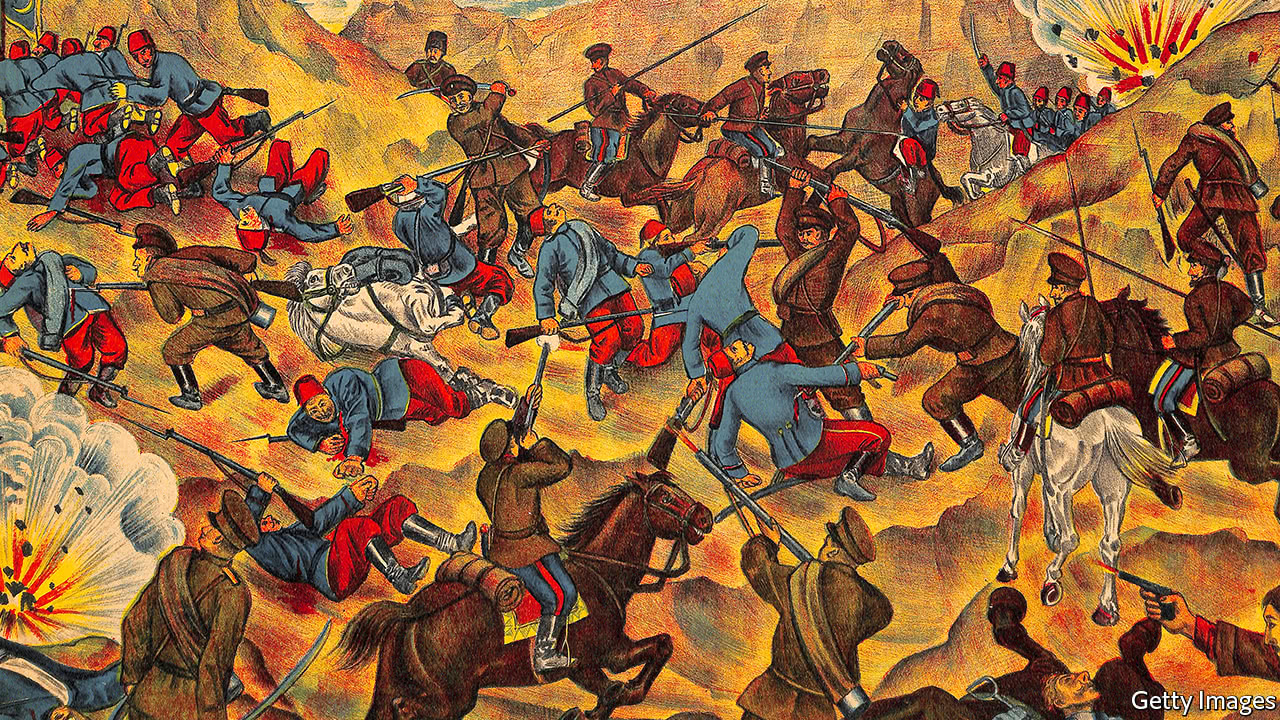
WHEN a Serb gunman shot an Austrian archduke in the summer of 1914, the nations of Europe tumbled into war with all the grace of bowling pins. Austria-Hungary declared war on Serbia, whose ally Russia declared war on Austria, whose ally Germany declared war on Russia, whose allies France and Britain declared war on Germany and Austria. By early August the continent was in flames.
Much as it wobbled like the rest, however, one of those bowling pins could not make up its mind. Which way would Turkey fall? Should the fading Ottoman Empire join the Triple Entente (Britain, France and Russia) or go with the Central Powers (Germany and Austria-Hungary)?

Latest updates

See all updates
Turkey’s 500-year-old empire was shrinking. It had lost its territories in Africa, nearly all its Mediterranean islands and most of its Balkan lands as well as chunks of eastern Anatolia. It was debt-ridden, industrially backward and politically shaky.
Still, the sultan’s lands straddled two continents, controlling access to the Black Sea. His Arabian territories stretched beyond the holy cities of Islam to the mountains of Yemen and the Persian Gulf, where there were rumoured to lie vast caverns of the sticky black liquid soon to replace coal as the world’s chief source of power.
Confident of Turkey’s weakness, Britain, France and Russia could have clobbered the Ottomans and divided the spoils. Thankfully, wiser heads prevailed. At a secret conclave aboard a British dreadnought off the coast of Norway in late July, a far-sighted politician by the name of Winston Churchill, then First Lord of the Admiralty, worked with French, Russian and Turkish diplomats to forge a treaty. The Turks drove a hard bargain for, as they coyly revealed, Germany too was proffering arms and gold in exchange for an alliance.
The deal that was reached proved immensely beneficial to all concerned. From France, Turkey received generous debt relief. Russia scrapped all claims to Ottoman territory, and made a limited goodwill withdrawal from parts of Anatolia. Churchill waived further payment on two warships that British shipyards were building for Turkey. And Turkey received assurances that its vulnerable extremities would not be attacked; for an empire that for a century had been preyed upon like a carcass this was a new lease of life.
The rewards to the Triple Entente were equally big. Granted exclusive access to the Black Sea, Russia’s allies could resupply the tsar’s armies when they faltered at the start of the war. With no need to defend its Turkish frontier, Russia moved thousands of crack troops from the Caucasus to shore up its front lines. Turkey signed separate agreements recognising British control of the Suez Canal, Aden and the Trucial sheikhdoms of the Persian Gulf, securing the sea lanes for Britain’s massive deployment of troops from the colonies to the Western Front. Turkey’s own army joined in a broad front against Austria-Hungary. Together, these Allied advantages are thought to have shortened the war by as much as a year; the Central Powers might not have sued for a truce as soon as America entered the war, but fought on instead.
Advertisement
Reprieved from collapse, the Ottoman Empire’s government pursued radical reforms. Challenged by growing nationalist tendencies from Arab, Armenian, Greek and Kurdish subjects, Sultan Mehmed V issued a historic firman or proclamation that recognised these as individual nations united under the Ottoman sovereign.
The sultan got to keep the title of caliph, commander of the Sunni Muslim faithful, which his ancestors had acquired four centuries earlier. This proved useful when the empire had to put down a rebellion of religious fanatics in central Arabia, led by a man called Ibn Saud who gained followers by claiming he would restore Islam to a purer state. But mostly the empire was seen as a tolerant place. When Nazi persecutions drove Jews from Europe in the 1930s, many took refuge there (as they had done when expelled from Spain in 1492), particularly in the province of Jerusalem.
If only
Needless to say, none of the above happened. Quite the opposite. Turkey aligned with Germany in the first world war, and the allies did attempt to invade and divide its empire. Churchill, instead of handing over the warships that ordinary Turks had paid for by subscription, had them seized for the British navy. In 1915 he ordered a catastrophic attack on Turkey; the landing at Gallipoli cost the allies 300,000 casualties. British campaigns against Turkey in Iraq and the Levant cost another million lives.
Turkey’s casualties mounted, by war’s end, to 3m-5m people, nearly a quarter of the Ottoman population. This included some 1.5m Armenians, slaughtered because Turkish officials believed they might become a fifth column for a hostile Russia. And when Britain and France grabbed the Ottomans’ Arab lands, their suppression of uprisings cost thousands more lives.
How much of today’s mayhem in the Middle East, from civil wars to terror in the name of Islam (and of restoring the caliphate) to the emergence of sectarian dictators such as Bashar al-Assad, not to mention of such a grudge-bearing Ottoman revivalist as Recep Tayyip Erdogan, might have been avoided, if only Churchill had embraced Johnny Turk instead of sinking him?
This article appeared in the The World If section of the print edition under the headline "Sultans of spring"
View comments
Reuse this content

Sunday, July 23, 2017

One North Korean "Nuke" Could Take Down America's Electricity Grid


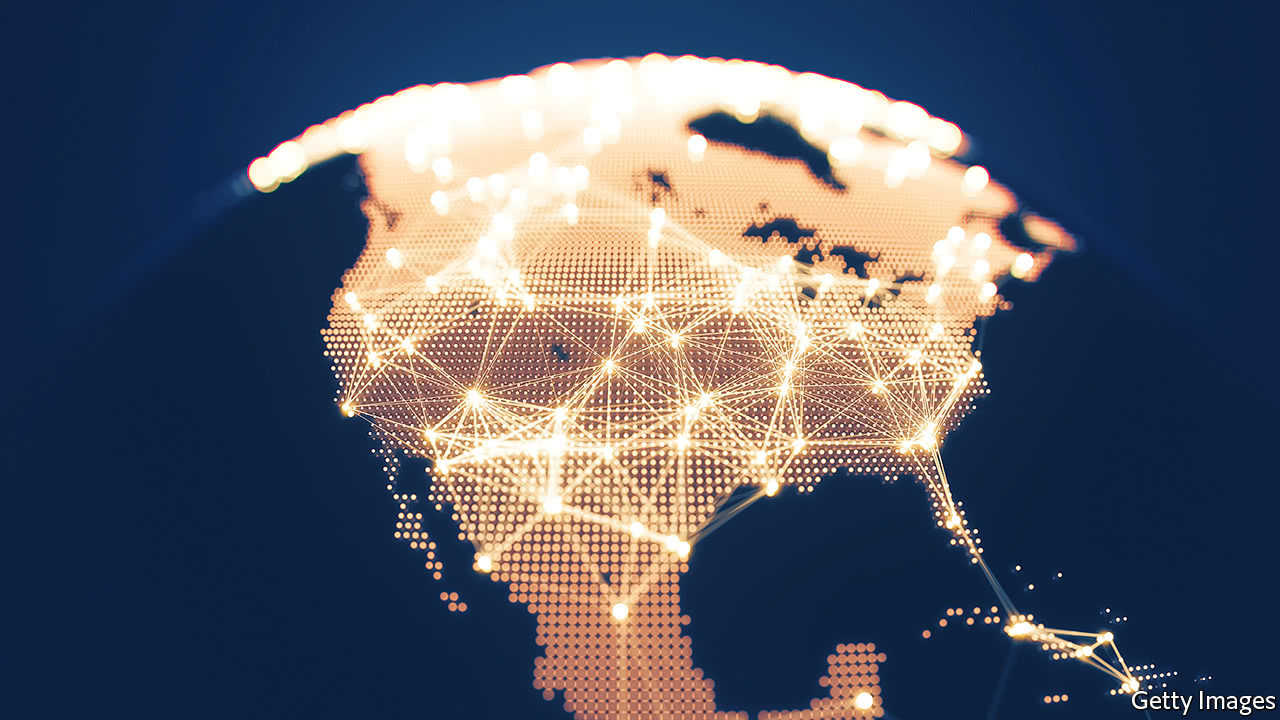
If an electromagnetic pulse took down America’s electricity gridThe disaster that could follow from a flash in the sky

The huge potential impact on rich countries of a prolonged loss of electricity
ON MARCH 13th 1989 a surge of energy from the sun, from a “coronal mass ejection”, had a startling impact on Canada. Within 92 seconds, the resulting geomagnetic storm took down Quebec’s electricity grid for nine hours. It could have been worse. On July 23rd 2012 particles from a much larger solar ejection blew across the orbital path of Earth, missing it by days. Had it hit America, the resulting geomagnetic storm would have destroyed perhaps a quarter of high-voltage transformers, according to Storm Analysis Consultants in Duluth, Minnesota. Future geomagnetic storms are inevitable.
And that is not the only threat to the grid. A transformer-wrecking electromagnetic pulse (EMP) would be produced by a nuclear bomb, designed to maximise its yield of gamma rays, if detonated high up, be it tethered to a big cluster of weather balloons or carried on a satellite or missile. A midrange missile tested by North Korea on April 29th 2017 exploded 71 kilometres (44 miles) up, well above the 40km or so needed to generate an EMP.

Latest updates

See all updates
Imagine a nuclear blast occurring somewhere above eastern Nebraska. Radiating outwards, the EMP fries electronics in southern Canada and almost all of the United States save Alaska and Hawaii, both safe below the horizon. It permanently damages the grid’s multimillion-dollar high-voltage transformers. Many are old (their average age is about 40). Some burst into flame, further damaging substations.
America runs on roughly 2,500 large transformers, most with unique designs. But only 500 or so can be built per year around the world. It typically takes a year or more to receive an ordered transformer, and that is when cranes work and lorries and locomotives can be fuelled up. Some transformers exceed 400 tonnes.
After the surge, telecom switches and internet routers are dead. Air-traffic control is down. Within a day, some shoppers in supermarkets turn to looting (many, unable to use credit and debit cards, cannot pay even if they wanted to). After two days, market shelves are bare. On the third day, backup diesel generators begin to sputter out. Though fuel cannot be pumped, siphoning from vehicles, authorised by martial law, keeps most prisons, police stations and hospitals running for another week.
With many troops overseas or tasked with deterring land grabs from opportunist foreign powers, there is only one American “peacekeeper” soldier for every 360 or so civilians. Pillaging accelerates. This leads many with needed skills to stay home to protect their families. Many of the rock climbers who help overwhelmed fire departments free tens of thousands from lifts begin to give up on day four despite the heart-wrenching banging that continues to echo through some elevator shafts.
Utilities can neither treat nor pump water or sewage. Raids on homes thought to have water become frequent and often bloody. Militias soon form to defend or seize control of swimming pools and other water sources. Streams and shovelled-out pits provide water in some areas, but sooner or later rain sweeps in faeces-ridden mud. Deaths from cholera and other diseases multiply.
As relief ships arrive, food, water filters and fuel are offloaded by hand amid chaos, but demand cannot be met even in port cities, much less inland. Where food can be grown without pumped irrigation, rural militias cluster into “aggie alliances” not keen to share with the hordes streaming out of cities. Some aggie alliances hole up in newly abandoned prisons, the better to defend scavenged crops and farm animals. The value of cash collapses along with faith in government.
The death rate picks up. Eventually, months later, about three quarters of the benighted area has power for at least ten hours a day. It would have been worse had 41 countries not dismantled transformers for reassembly in North America. (The most generous donors have to accept rolling blackouts.) Martial law ends six months after the original energy surge. Roughly 350,000 Canadians and 7m Americans have died.
A similar nightmare could happen in any rich country—grids outside America are vulnerable too. Such scenarios necessarily dip into “uncharted territory for an industrialised society”, as Thomas Popik, head of the Foundation for Resilient Societies, a think-tank in New Hampshire, puts it. But shorter blackouts suggest that things can get bad fast. Just three hours after Chile’s grid-collapsing earthquake on February 27th 2010, even relatively wealthy people began looting stuff they did not need. With electricity gone, normal rules had suddenly vanished and “out of control” emotions took over, says Roberto Machiavello, then rear-admiral and top martial-law official in Chile’s Concepción area.
Advertisement
Without soldiers at hospitals, Admiral Machiavello says, doctors would have stayed at home. Less than a week after Hurricane Katrina struck New Orleans in 2005, many police officers opted to protect their families rather than work. Chris Ipsen, spokesman for the Emergency Management Department of Los Angeles, estimates that, with the grid down, Angelenos would be foodless in less than ten days. In poor areas, he reckons, groups would quickly form and say, “Hey, let’s go over to the mansions in Bel Air.”
Insurance, anyone?
In the aftermath of Haiti’s earthquake in January 2010, cholera alone killed at least 10,000. Jacques Boncy, head of Haiti’s National Laboratory of Public Health, reckons that, in three months of blackout in America, faecal contamination of water would kill several million. That might be optimistic. The EMP Commission, an expert group set up by America’s Congress to study the threat, reckoned in 2008 that the first year of societal breakdown could finish off two-thirds of Americans.
A country’s electricity grid can be knocked out in other ways. One is cyber-attack. Hackers cut power to 230,000 Ukrainians in December 2015—but only for hours. Long-term damage from cyber-assaults is unlikely, says Kenneth Geers, a security expert who studied the attack.
What about terrorism? Shooting up transformers at just nine critical substations could bring down America’s grid for months, according to an analysis performed in 2013 by the Department of Energy’s Federal Energy Regulatory Commission (FERC), says its then-chairman, Jon Wellinghoff. Others think more transformers would need to be taken out. At any rate, information on which substations are critical is secret. In 2013 gunmen knocked out 17 of 21 transformers at a substation in San Jose. It was not a critical one.

The sun probably poses a greater risk of a sustained outage than hackers or saboteurs. That is one reason the EMP Commission reconvened in January 2017. Kit that protects transformers from EMP also saves them from geomagnetic storms, though the reverse is not true. George Baker, a staffer on the commission and a former boss of EMP research at the Pentagon’s Defence Threat Reduction Agency, says that critical military systems have been EMP-proofed. But other agencies, he says, have done “precious little” to safeguard civilian infrastructure. The commission will issue an updated report in September. It will be as grim as the assessment in 2008, he says.
The expense of installing surge-blockers and other EMP-proofing kit on America’s big transformers is debated. The EMP Commission’s report in 2008 reckoned $3.95bn or less would do it. Others advance higher figures. But a complete collapse of the grid could probably be prevented by protecting several hundred critical transformers for perhaps $1m each.
Yet not much is being done. Barack Obama ordered EMP protection for White House systems, but FERC, the utilities regulator, has not required EMP-proofing. Nor has the Department of Homeland Security (DHS) pushed for a solution or even included EMP in official planning scenarios. (The Pentagon should handle that, DHS officials say; the Pentagon notes that civilian infrastructure is the DHS’s responsibility.) As for exactly what safeguards are or are not needed, the utilities themselves are best equipped to decide, says Brandon Wales, the DHS’s head of infrastructure analysis.
But the utilities’ industry group, the North American Electric Reliability Corporation (NERC), argues that, because EMP is a matter of national security, it is the government’s job. NERC may anyway be in no rush. It took a decade to devise a vegetation-management plan after, in 2003, an Ohio power line sagged into branches and cut power to 50m north-easterners at a cost of roughly $6bn. NERC has repeatedly and successfully lobbied Congress to prevent legislation that would require EMP-proofing. That is something America, and the world, could one day regret.

This article appeared in the The World If section of the print edition under the headline "A flash in the sky"

View comments
Reuse this content


A Deadline Call On Posthumous Privacy

Photo
Sally Ride in 1981 at the mission operations control room during a STS-2 simulation at Johnson Space Center in Houston. CreditNASA
Five years have passed since the death of Sally Ride, the first American woman to fly in space. Her New York Times obituary — specifically, the way we addressed her sexuality — provoked an intense debate that still echoes from time to time.
In the third week of July 2012, The Times learned that Dr. Ride was terminally ill and was receiving hospice care. She was only 61, and her illness had been kept secret. I started working on an advance obituary right away.
Dr. Ride died that July 23. Late that day, her company, Sally Ride Science, posted a statement on its website. I read it hurriedly, picked up the name of a survivor we had not known about and hastily typed it into the draft: Tom O’Shaughnessy, Dr. Ride’s partner of 27 years.
“It’s not Tom,” said the obituaries editor, William McDonald, reading the company’s statement. “It’s Tam.”
I had misread it. Tam was a woman’s name. Only then did we have an inkling that Sally Ride had been gay. We quickly had to decide how to approach it.
Continue reading the main story
The Times has a general policy of not “outing” people who choose to keep their sexuality private. But we also identify immediate survivors in obituaries. So it was clear that we would mention Dr. O’Shaughnessy. But beyond that, what more could we — or should we — say?
We knew nothing about the relationship, and with the deadline closing in, we were in no position to report more fully on the matter had we wanted to.
There was no indication that Dr. Ride’s private life was relevant to her remarkable professional accomplishments, the focus of the obituary. Had she been an activist for L.G.B.T. causes or had she spoken openly about how her sexuality had shaped her life, if at all, we would have reported it. But such was not the case. If we made a big deal of the new information, it might seem as if we were trying to draw exactly the type of attention it seemed she had sought to avoid.
In the end, after some back-and-forth among the obituary editors, we decided to identify Dr. O’Shaughnessy as Dr. Ride’s partner and survivor and leave it at that.
The acknowledgment of the relationship set off a public debate about what to say — or not to say — about a national figure’s private life. Some gay rights activists accused The Times of homophobia for not drawing more attention to the couple’s relationship, and some criticized Dr. Ride herself for not having come out. Other readers thought we handled it right. Mr. McDonald was invited to discuss the episode on National Public Radio’s “On the Media.” I was grilled by the Columbia Journalism Review.
Dr. Ride was described by her sister, in later interviews with other news outlets, as an extremely private person who kept many aspects of her life out of the public eye. But family and friends knew she was gay, the sister said; Dr. Ride had made no effort to hide it from them.
Dr. O’Shaughnessy told interviewers much the same, adding that in 2001, when she and Dr. Ride were starting Sally Ride Science, they feared that sponsors would reject them if it became known that they were a couple. Indeed, in her era, had Dr. Ride disclosed that she was gay, it might have ended her astronaut career before it had even started.
As a postscript, Mr. McDonald, my editor, gave Dr. Ride and Dr. O’Shaughnessy’s relationship more prominence in the obituary when it was reprinted in 2012 in an annual collection of Times obits that he edited. There he also updated the obit to acknowledge the public reaction.
The revised obituary said: “Some commentators called it a posthumous ‘coming out’; others saw the disclosure as an invasion of the privacy she had long maintained. Some gay rights organizations adopted her posthumously as a heroine; but their critics countered that she had never identified herself with their cause. Some news organizations were accused of playing down the relationship; others, of ‘outing’ her.”
It all seemed like just what Sally Ride would not have wanted.
Continue reading the main story